
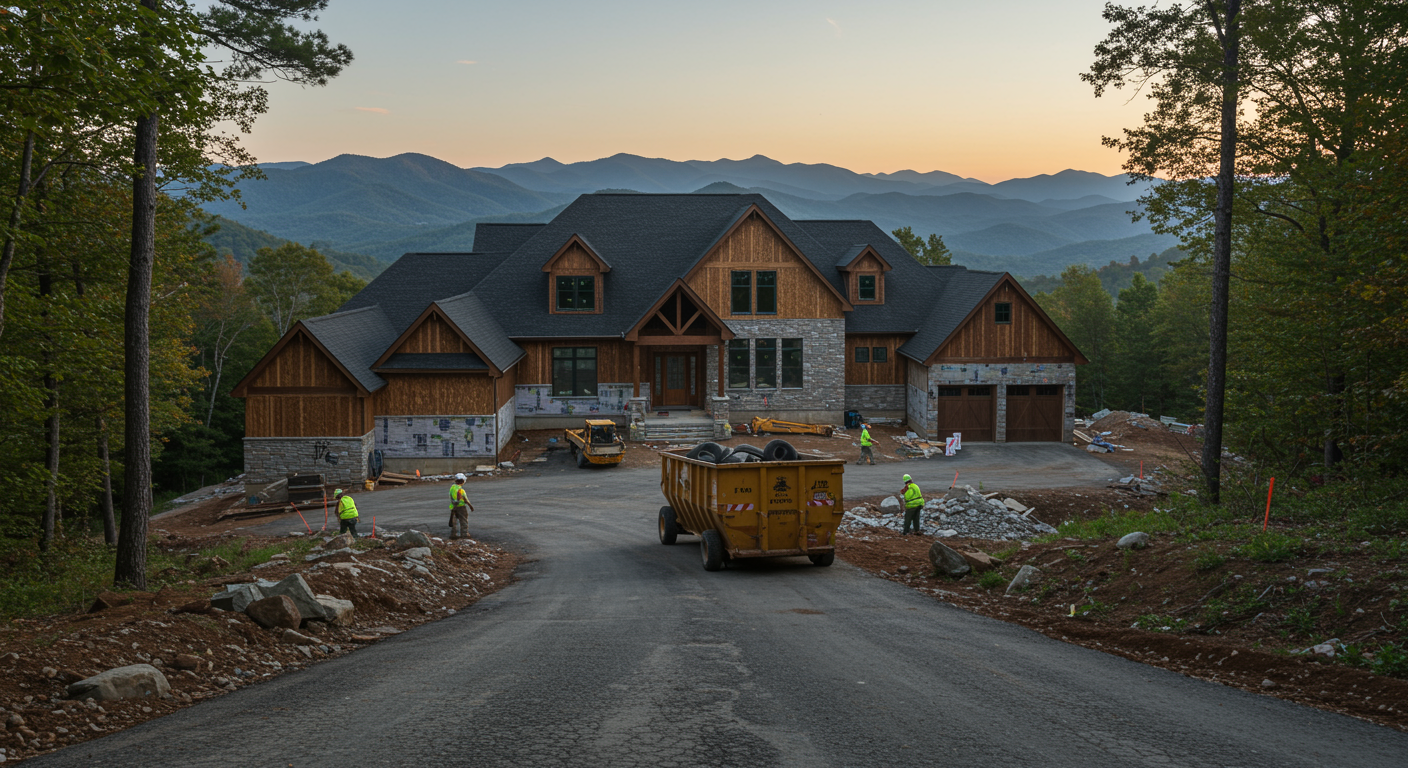
Remodeling a home in Western North Carolina isn’t the same as remodeling in a flat suburban neighborhood. Between steep driveways, narrow access roads, and unpredictable terrain, even something as “simple” as placing a dumpster can quickly become a bottleneck.
And when waste removal slows down, your entire project follows.
If you’re planning a remodel in WNC, here’s what you need to know about dumpster placement—and how to avoid costly mistakes.
🚧 Why Mountain Terrain Changes Everything
In typical residential areas, dumpsters are dropped off, filled, and hauled away with minimal coordination.
In WNC, you’re dealing with:
- Steep inclines that trucks struggle to navigate
- Tight driveways with limited turning radius
- Gravel or soft ground that can’t support heavy loads
- Limited roadside space for safe placement
This means poor planning doesn’t just cause inconvenience—it can delay your project, damage your property, or even prevent delivery entirely.
⚠️ Common Dumpster Placement Problems in WNC
1. Driveways That Are Too Steep or Narrow
Most standard roll-off trucks require stable, level access to safely drop a dumpster. If your driveway has a sharp incline or tight entry, the driver may refuse placement—or worse, risk property damage.
Solution:
Pre-assess access and consider placing the dumpster at a flatter, accessible point—even if it means a short carry distance for debris.
2. Limited Staging Areas
Mountain homes often don’t have wide, open spaces for staging materials and waste.
Solution:
Plan your site layout in advance. A good contractor will map out:
- Material delivery zones
- Work zones
- Dumpster placement
All before demolition even begins.
3. Soft Ground & Weight Damage
Dumpsters are heavy—even before they’re filled. On gravel, dirt, or asphalt, they can:
- Sink into the ground
- Crack driveways
- Leave permanent marks
Solution:
Use protective boards or pads under the dumpster. This simple step can save thousands in repairs.
4. Roadside Placement Restrictions
If your property doesn’t allow for on-site placement, you might need to place the dumpster along the road.
This introduces:
- Permit requirements
- HOA restrictions
- Safety concerns for passing vehicles
Solution:
Check local guidelines early. Some areas require permits for street placement, and approvals can take time.
5. Delivery & Pickup Delays
In mountain areas, weather and terrain can delay truck access—especially after rain.
Solution:
Build buffer time into your schedule and avoid last-minute pickups. Efficient waste management is part of keeping your remodel on track.
🛠️ How Proper Dumpster Planning Speeds Up Your Remodel
When dumpster logistics are handled correctly:
- Crews work faster without debris buildup
- Job sites stay safer and more organized
- You avoid costly delays and re-deliveries
In short, waste management becomes a tool for efficiency—not a problem to solve mid-project.
💡 Pro Tip: Think Like an Operations Manager
Most homeowners focus on finishes—tiles, paint, fixtures.
But experienced builders know:
Logistics drive timelines.
Dumpster placement is one of those behind-the-scenes decisions that can make or break the flow of your remodel.
✅ Final Takeaway
In Western North Carolina, your terrain isn’t just part of the view—it’s part of the construction strategy.
Planning your dumpster placement ahead of time ensures:
- Faster project completion
- Lower risk of damage
- Fewer unexpected costs
If you’re remodeling in WNC, don’t treat waste removal as an afterthought. Treat it as part of the plan.