
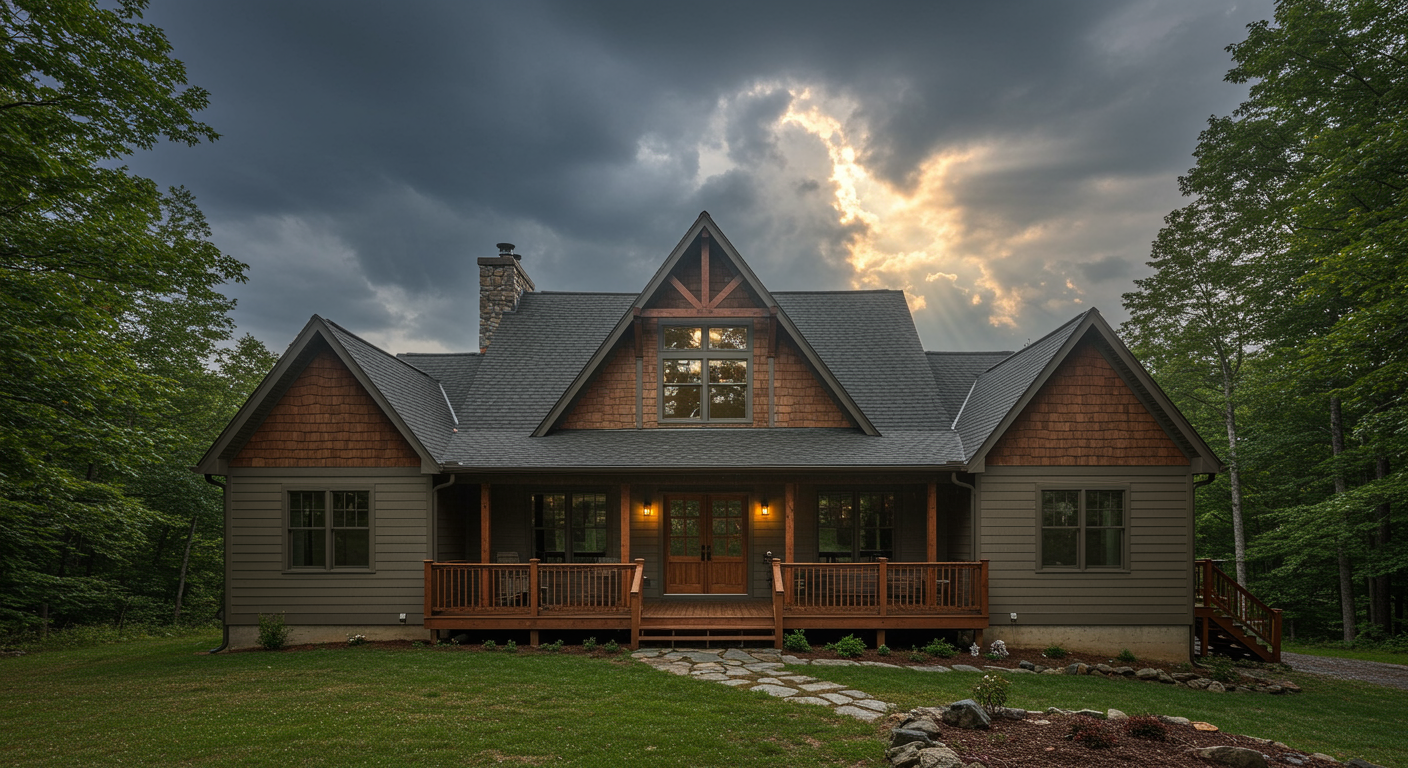
If you’ve lived in Asheville long enough, you know the weather doesn’t ease into seasons—it swings.
One day it’s rain. The next, temperatures drop overnight. Then suddenly, the sun is back out like nothing happened.
But for your home, everything happened.
Weeks like this don’t just pass by—they stress-test your entire exterior system. And if there are weak points, they start to show.
🌧️ The Real Problem Isn’t the Rain—It’s the Transition
Rain alone isn’t usually what causes damage.
It’s what follows:
- Moisture enters small, invisible gaps
- Temperatures drop overnight
- That moisture expands as it cools
- Materials contract, shift, and separate
This cycle quietly targets the most vulnerable parts of your home—the places most homeowners never think to check.
🏠 1. Roof Penetrations: The #1 Leak Source
Your roof isn’t just shingles—it’s a system filled with openings:
- Vent pipes
- Exhaust fans
- Chimneys
Each one relies on flashing and sealants to stay watertight.
What this week exposes:
- Cracked sealant from temperature swings
- Loose flashing from wind and expansion
- Water intrusion that only appears after heavy rain
👉 If you notice ceiling stains after a storm, this is usually where it starts.
🪟 2. Window Flashing Failures
Windows are one of the most common—and most misunderstood—failure points.
They’re not waterproof. They’re water-managed systems.
What goes wrong during weeks like this:
- Water gets behind trim due to failed flashing
- Cold temperatures prevent proper drainage
- Expansion creates micro-gaps around frames
Early signs:
- Soft drywall near windows
- Bubbling paint or trim
- Drafts during colder nights
🧱 3. Siding Transitions & Material Joints
Homes in Blue Ridge Mountains conditions often combine multiple materials:
- Fiber cement siding
- Stucco or EIFS
- CMU or masonry bases
Where these materials meet is where problems begin.
Why this week matters:
- Each material expands and contracts differently
- Moisture gets trapped at transition points
- Sealants break down faster under repeated stress
👉 These aren’t visible failures at first—they develop behind the surface.
🪵 4. Deck Ledger Boards & Connections
This is one of the most critical—and most dangerous—weak points.
Your deck is attached to your home at the ledger board, and it relies heavily on:
- Proper flashing
- Tight structural connections
- Moisture protection
What weather like this reveals:
- Water intrusion behind the ledger
- Early-stage wood rot
- Hidden structural weakening
👉 Most deck failures don’t happen suddenly—they build up over seasons like this.
🧰 5. Trim, Fascia, and Soffits
These finishing elements take the brunt of weather exposure.
During a week like this:
- Wood absorbs moisture during rain
- Rapid drying causes cracking and splitting
- Paint begins to fail, exposing raw material
What you’ll start to see:
- Peeling paint
- Warped trim
- Small gaps that weren’t there before
🌄 Why This Matters More in Mountain Climates
Homes in Blue Ridge Mountains don’t just deal with weather—they deal with constant fluctuation:
- Faster temperature drops
- Higher moisture retention
- Stronger UV exposure after storms
That combination accelerates wear on every exterior system.
🔍 What Homeowners Should Do After a Week Like This
You don’t need to climb your roof—but you should pay attention.
Check for:
- New ceiling or wall stains
- Changes around windows and doors
- Peeling exterior paint
- Loose or shifting trim
- Any musty or damp smells
These are early signals—not cosmetic issues.
🧠 The Difference Between a Repair and a Bigger Problem
Catching these issues early means:
- Minor sealing instead of major replacement
- Simple fixes instead of structural repairs
- Controlled costs instead of unexpected expenses
Ignoring them? That’s when small vulnerabilities turn into full-scale damage.
🔨 Final Thought
Weeks like this aren’t just “weather events.”
They’re diagnostic moments for your home.
And while most people wait until something fails, the smarter move is to understand where your home is most vulnerable—before it shows up as damage.