
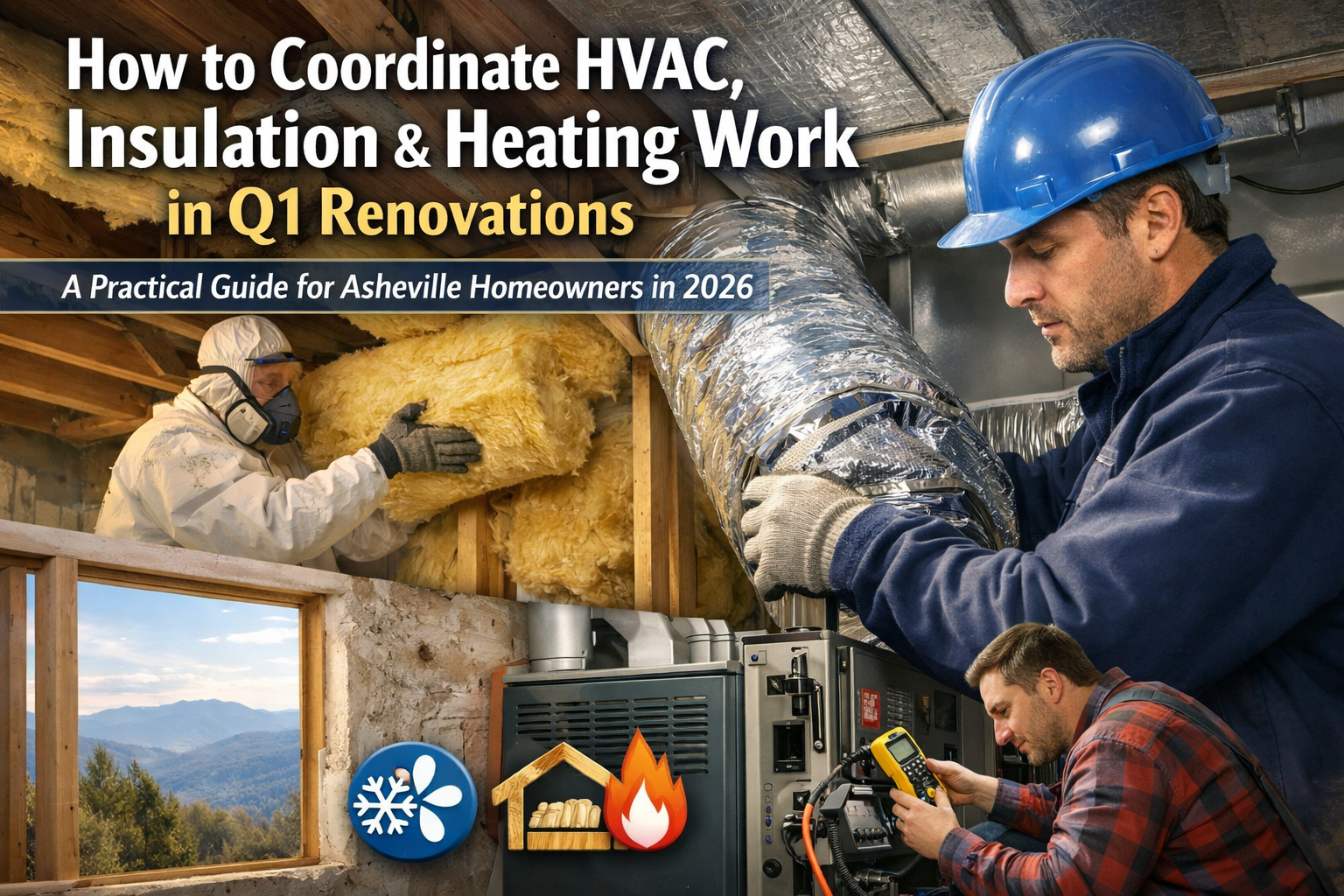
If you’ve lived in Asheville for any amount of time, you already know this truth: winter here isn’t brutal—but it’s unpredictable. One week it’s 55 and sunny, the next it’s freezing rain with damp cold that seeps into your bones. That unique mountain climate makes HVAC, insulation, and heating upgrades especially critical, and Q1 (January–March) 2026 is actually one of the smartest times to tackle them—if you plan correctly.
Many Asheville homeowners wait until summer to think about HVAC or until they feel drafts in winter to think about insulation. But the homes that feel the most comfortable year-round are usually the ones that handled these systems together, not separately.
Let’s break down how to coordinate HVAC, insulation, and heating work during a Q1 renovation—based on real conditions Asheville residents face.
Why Q1 2026 Is a Strategic Window in Asheville
1. You’re Fixing Problems When They’re Most Obvious
In winter, weaknesses don’t hide.
- Cold floors
- Drafty rooms
- Uneven heating between levels
- High electric or gas bills
- Heat pumps running constantly but never quite catching up
Q1 forces your home to “tell the truth.” That makes it the best diagnostic season, not the worst.
2. Contractor Availability Is Often Better
In Asheville, spring and summer are peak seasons for:
- Additions
- Decks
- Exterior renovations
- Short-term rental refreshes
In Q1, HVAC and insulation contractors often have more availability, better scheduling flexibility, and sometimes more room for thoughtful problem-solving instead of rush jobs.
The Biggest Mistake Asheville Homeowners Make
Upgrading HVAC without fixing insulation first
This is extremely common in older Asheville homes—especially:
- 1940s–1970s builds
- Homes with crawl spaces
- Split-levels and mountain-slope houses
- Renovated homes with additions added at different decades
Installing a new heat pump or furnace won’t fix heat loss. It just makes the system work harder.
The Correct Order: What to Do First (and Why)
Step 1: Insulation & Air Sealing (Always First)
Before touching HVAC equipment, address the building envelope.
Key Asheville problem areas:
- Crawl spaces with moisture issues
- Attics with uneven or compressed insulation
- Rim joists leaking cold air
- Older windows with poor seals
- Additions that were never properly insulated
Q1 advantage:
Cool weather makes air leaks easier to detect, and moisture issues are more visible.
What this improves immediately:
- More even indoor temperatures
- Reduced heating costs
- Less strain on HVAC systems
- Better humidity control (huge in Asheville)
Step 2: Heating System Evaluation (Not Just Replacement)
In Asheville, many homes rely on:
- Heat pumps (often older models)
- Hybrid systems (heat pump + auxiliary heat)
- Electric baseboard heat in older homes
- Gas furnaces in certain neighborhoods
Instead of automatically replacing equipment, Q1 is the time to ask:
- Is the system oversized or undersized?
- Are certain rooms consistently colder?
- Is auxiliary heat kicking on too often?
- Does humidity feel off even when warm?
After insulation upgrades, HVAC load calculations change—sometimes significantly. That can mean:
- Smaller (more efficient) systems
- Zoned heating solutions
- Smarter thermostat placement
Step 3: HVAC Upgrades & Distribution Fixes
Once insulation is addressed, HVAC work becomes more precise.
Common Q1 HVAC improvements for Asheville homes:
- Duct sealing and balancing
- Adding or correcting zoning
- Replacing outdated heat pumps with cold-climate models
- Improving returns in older layouts
- Integrating smart thermostats for seasonal swings
Important note:
Mountain homes often have elevation-related temperature differences between floors. Balancing airflow matters just as much as equipment quality.
Living in the Home During Q1 Work: What to Expect
Many Asheville residents renovate while still living in the house—especially in winter.
Planning tips:
- Schedule insulation and duct work in phases
- Keep one “warm zone” operational at all times
- Avoid full HVAC shutdowns during cold snaps
- Coordinate work around weather forecasts
A well-planned Q1 project prioritizes comfort continuity, not just construction speed.
Energy Costs, Comfort & ROI in 2026
With energy prices continuing to fluctuate, Asheville homeowners in 2026 are thinking beyond aesthetics.
Properly coordinated HVAC + insulation upgrades can:
- Lower winter heating costs
- Improve summer cooling efficiency
- Reduce humidity-related issues
- Increase long-term home value
- Improve comfort for aging-in-place homeowners
- Make short-term rentals more appealing year-round
This is especially relevant in Asheville’s mixed housing market—where homes often serve as primary residences, rentals, or future resale properties.
Final Thought: Think System, Not Components
The most comfortable homes in Asheville aren’t the ones with the most expensive HVAC systems—they’re the ones where insulation, heating, and airflow work together.
Q1 2026 isn’t just “winter renovation season.”
It’s the smartest time to get your home’s core systems right—before spring projects, summer humidity, and peak contractor demand arrive.