
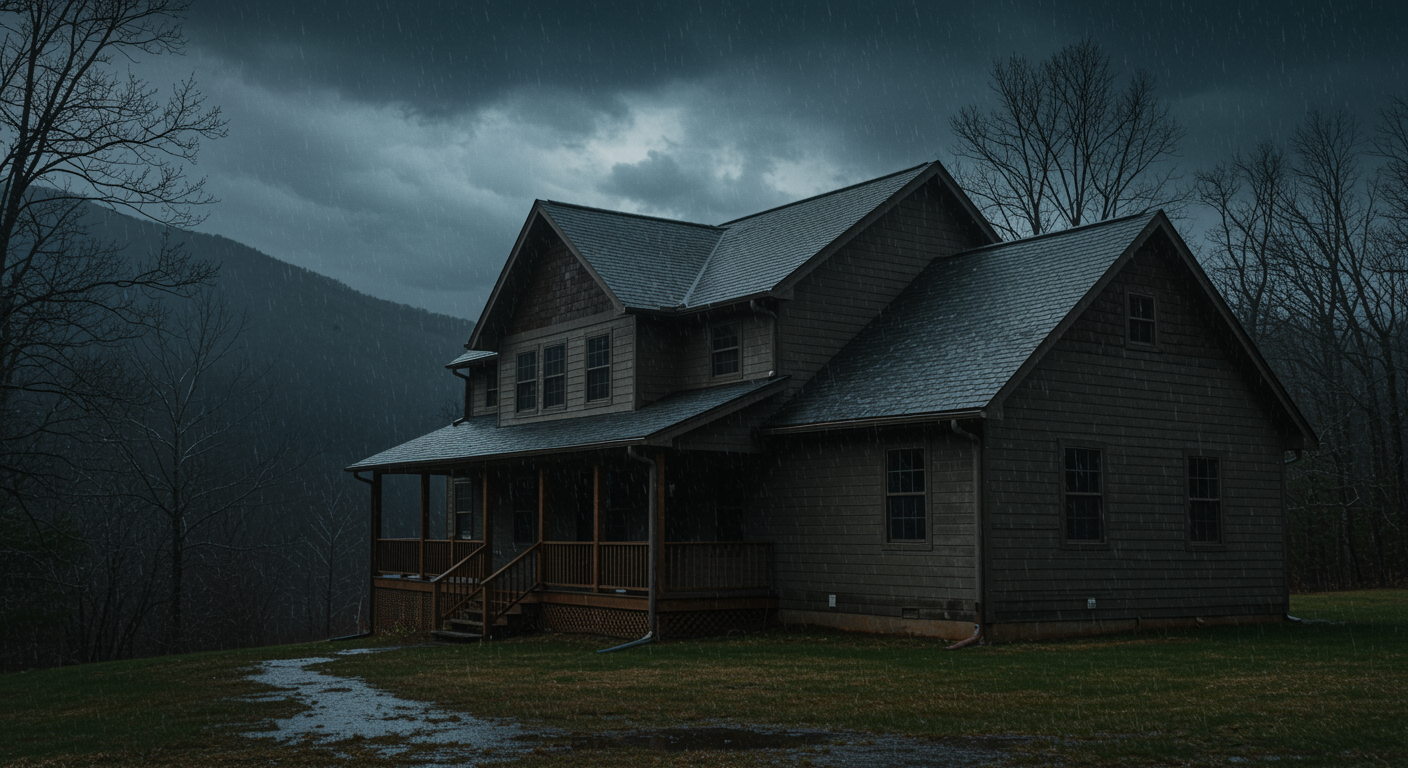
Right after Easter, most homeowners in Western North Carolina shift into spring mode—longer days, better weather, and plans for outdoor living. But here’s what many miss:
Your home is already under pressure.
Spring rain doesn’t gently “arrive.” In WNC, it tests everything winter weakened—your roof edges, your gutters, your grading, and your foundation. And if there’s a weak point, water will find it.
🌧️ Why Spring Is Actually “Damage Season”
Winter does the silent damage. Spring reveals it.
- Freeze-thaw cycles loosen materials
- Debris builds up in gutters
- Soil shifts and settles
- Small cracks form in unnoticed places
Then the rain comes—and suddenly:
- That minor clog becomes overflow
- That small gap becomes a leak
- That damp smell becomes a moisture problem
Water doesn’t create the problem. It exposes it.
🏠 Where Your Home Is Being Tested Right Now
1. Gutters & Downspouts
If water isn’t flowing away from your home, it’s flowing into it.
- Overflowing gutters spill water along your foundation
- Short downspouts dump water right where it shouldn’t be
- Debris creates hidden pooling points
👉 In WNC terrain, this often leads to erosion and foundation stress faster than expected
2. Roof Edges & Flashing
Most homeowners look at the roof surface—but damage starts at the edges.
- Loose flashing allows water intrusion
- Shingle edges curl after winter
- Valleys trap debris and moisture
👉 This is where leaks begin before you ever see a ceiling stain
3. Foundation & Crawlspace
Water always follows gravity—and in the mountains, that’s a problem.
- Poor drainage pushes water toward your home
- Crawlspaces trap moisture and humidity
- Standing water creates long-term structural risks
👉 If you smell mustiness, it’s not “normal.” It’s early warning.
4. Windows, Doors & Exterior Seals
These are the quiet entry points.
- Caulking cracks after winter
- Frames expand and contract
- Water seeps in slowly, invisibly
👉 By the time you notice it, you’re often looking at rot, mold, or insulation damage
⚠️ The Real Risk: Waiting Too Long
Here’s the pattern we see across WNC homes:
- April: “It’s probably nothing”
- May: “We should keep an eye on it”
- June: “Why is this getting worse?”
- July: Emergency repair
By then, what could’ve been a simple fix becomes a costly project.
🔨 When This Becomes a Remodeling Conversation
Not every issue needs a remodel—but some are telling you something bigger:
- Repeated water issues → Drainage system redesign
- Aging roof + leaks → Full roofing upgrade
- Persistent crawlspace moisture → Encapsulation system
- Exterior wear + water intrusion → Siding or full exterior renovation
👉 In WNC, smart homeowners don’t wait for failure—they upgrade before damage compounds
🧠 The Bottom Line
Spring rain isn’t the problem—it’s the test.
And right now, your home is either:
- Passing quietly
- Or showing early signs you can still act on
The difference between a minor fix and a major remodel often comes down to what you do right after Easter.