
Creating a Safe Haven: Accessible Bathroom Design is Key.
The bathroom is often one of the first areas homeowners consider for accessibility upgrades, and for good reason. It’s a space where safety and independence are paramount. Modern solutions go far beyond simple grab bars. Think about installing a curbless shower, which allows for seamless entry with or without a wheelchair, reducing trip hazards significantly. Pair this with a comfortable built-in bench and an adjustable-height showerhead for ultimate convenience. Comfort-height toilets, typically a few inches taller than standard models, make sitting and standing easier on the joints. Non-slip flooring, such as textured ceramic tiles or luxury vinyl planks, is essential to prevent falls. Consider wider doorways (at least 32 inches) and lever-style faucets and shower controls, which are easier to operate than traditional knobs, enhancing usability for hands with limited dexterity. These thoughtful modifications transform a potentially hazardous room into a truly safe and relaxing retreat.
Kitchens That Work for Everyone & Welcoming Entryways.
The heart of the home, the kitchen, should be just as accessible as any other room. Modern accessibility in the kitchen focuses on adjustable features and smart layouts. Consider installing adjustable-height countertops or work surfaces, allowing users to customize the height for various tasks, whether seated or standing. Pull-out shelves and drawers within base cabinets eliminate the need to bend and reach deep into cupboards, making items easily accessible. Side-opening ovens or wall ovens installed at an ergonomic height reduce strain and increase safety. Lever-style handles on faucets and appliances are a small but significant change that makes a big difference. Beyond the kitchen, your home’s entryway sets the tone for accessibility. Installing a gently sloped ramp or a zero-threshold entry system provides smooth access for wheelchairs, strollers, and walkers. Wider doorways are crucial here too. Smart home technology, such as keyless entry systems and automated lighting, further enhances convenience and security, ensuring a warm and welcoming entrance for everyone.
Seamless Movement Throughout Your Home with Thoughtful Design.
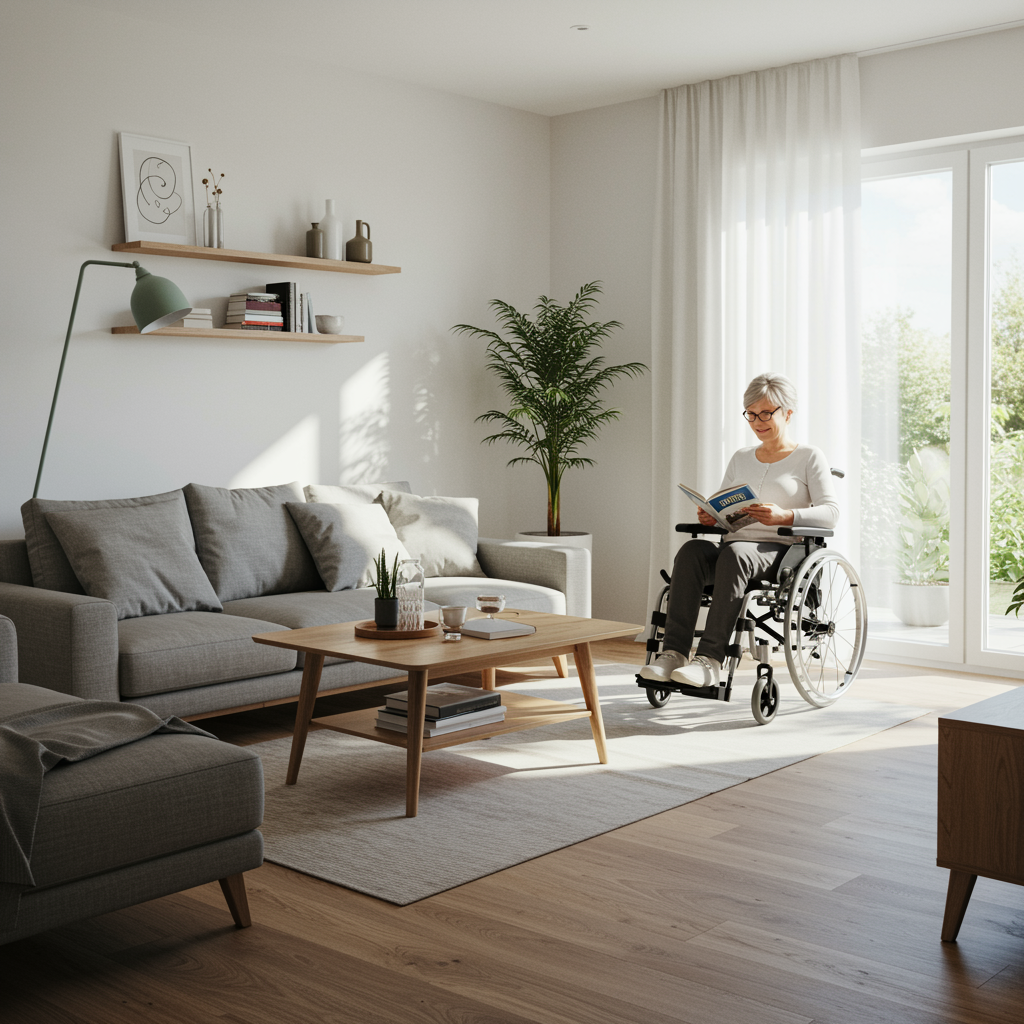
Beyond the specific rooms, ensuring smooth and safe movement throughout the entire home is vital for true accessibility. This involves considering the flow and pathways. Wider doorways and hallways (ideally 36 inches or more) allow for easy maneuverability, especially for those using mobility aids. Flooring choices play a significant role; opt for low-pile carpets, hardwood, or laminate with smooth transitions between different materials to prevent tripping hazards. Eliminate area rugs that can bunch up. For multi-story homes, modern stairlifts offer a safe and efficient way to navigate between floors, and for more extensive renovations, residential elevators are becoming increasingly compact and affordable. Smart home technology can also be integrated to control lighting, thermostats, and even blinds with voice commands or a smartphone, adding another layer of convenience and independence. These holistic considerations ensure that every corner of your home is usable and enjoyable.
Investing in Your Future: Planning Accessible Renovations Wisely.
Undertaking accessibility renovations is not just about immediate needs; it’s a smart, long-term investment in your home and your future. These upgrades can significantly increase your home’s value and marketability, appealing to a broader range of potential buyers, particularly as the population ages. When planning, it’s crucial to consult with professionals who specialize in accessible design. Look for Certified Aging-in-Place Specialists (CAPS) or architects with experience in universal design principles. They can help you navigate local building codes, identify the most impactful modifications for your specific needs, and ensure the renovations are both functional and aesthetically pleasing. Additionally, research potential financial assistance programs, grants, or tax credits for accessibility modifications, which can help offset costs. By planning wisely and partnering with experts, you can create a beautiful, functional home that supports a lifetime of comfort, independence, and peace of mind.