
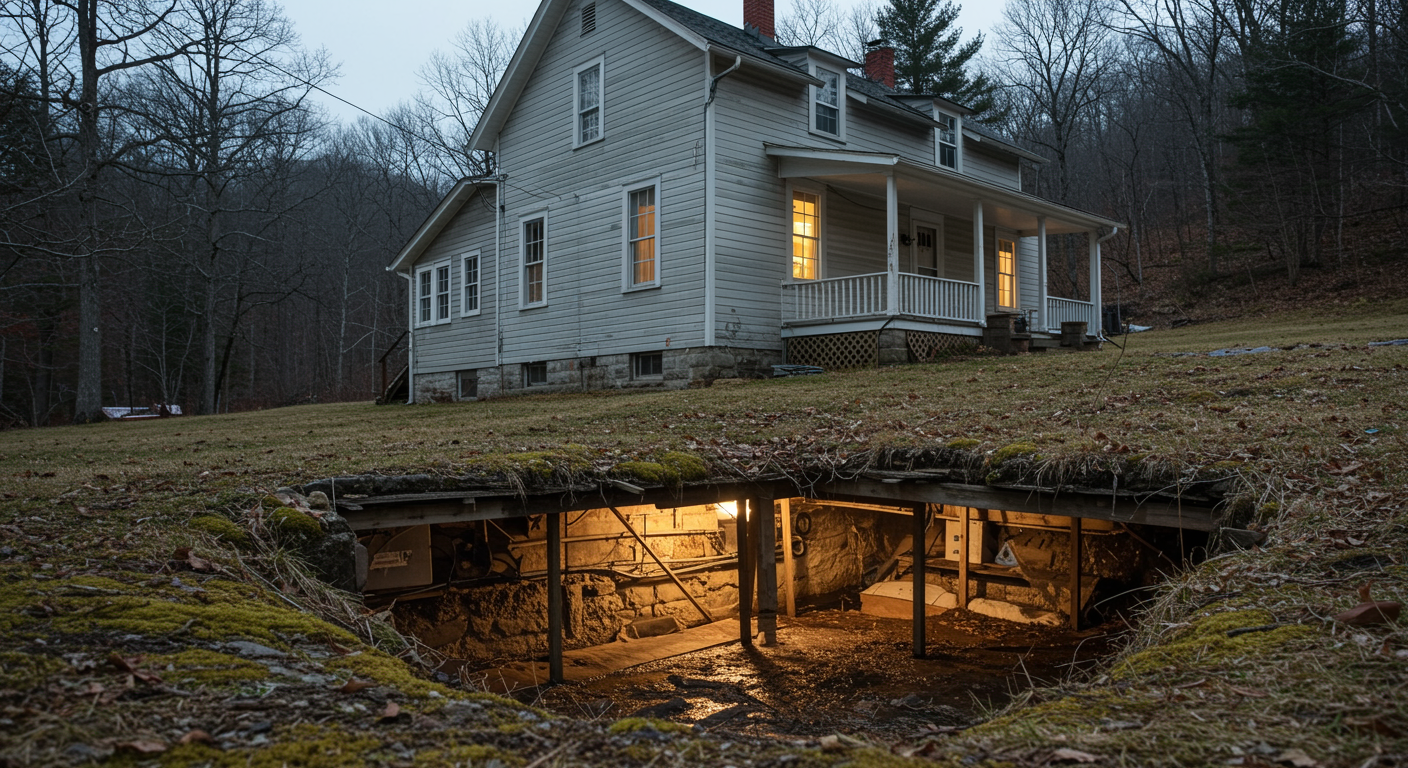
In Asheville, remodeling rarely begins with tile samples or cabinet layouts. More often than not, it starts in a place homeowners don’t post on Instagram — the crawlspace.
That’s not because Asheville homeowners are overly cautious. It’s because many of our homes, especially those built between the 1920s and 1970s, quietly tell us where the real problems are first.
Asheville Homes Are Older — and the Crawlspace Shows It
A large portion of Asheville’s housing stock was built long before modern moisture barriers, insulation standards, or drainage planning. Crawlspaces were designed to “breathe,” not stay dry — a concept that doesn’t age well in Western North Carolina’s damp climate.
Over time, that leads to:
- Persistent moisture
- Sagging or uneven floors
- Musty smells that never quite go away
- Hidden plumbing or structural issues
By the time a homeowner notices cracked tile, soft flooring, or drafty rooms, the crawlspace has usually been signaling trouble for years.
Moisture Is the Quiet Budget Killer
Asheville’s combination of rainfall, humidity, and freeze–thaw cycles makes moisture management one of the most important — and most overlooked — parts of home ownership.
When crawlspaces stay damp:
- Insulation loses effectiveness
- Wood framing absorbs moisture
- Mold and mildew become more likely
- Heating and cooling costs creep up
Homeowners often come in planning a kitchen or bathroom remodel, only to realize that moisture below the floor will shorten the lifespan of whatever they build above it.
Starting in the crawlspace isn’t pessimistic — it’s protective.
Floors Don’t Lie
One of the most common triggers for crawlspace work in Asheville homes is flooring.
Homeowners notice:
- Floors that slope slightly
- Tile cracking without obvious cause
- Hardwood that cups or separates
- Doors that no longer close cleanly
These aren’t cosmetic issues. They’re often signs of:
- Inadequate or failing floor supports
- Moisture-affected joists
- Previous repairs that addressed symptoms, not causes
Addressing these issues first gives every future renovation a stable foundation — literally.
Crawlspace Work Makes the Rest of the Remodel Smarter
When homeowners start below the house, they usually gain clarity above it.
Crawlspace improvements can:
- Reduce HVAC strain
- Improve indoor air quality
- Stabilize temperatures room-to-room
- Prevent repeat repairs down the line
That often leads to smaller, more intentional remodels rather than large, reactive ones. Instead of gutting rooms to chase problems, homeowners can upgrade finishes with confidence that the home’s structure and systems are working with them, not against them.
This Isn’t About Overbuilding — It’s About Longevity
One concern Asheville homeowners often have is over-improving their homes relative to the neighborhood. Crawlspace work doesn’t inflate resale value in flashy ways, but it protects the investment that’s already there.
It’s the kind of work that:
- Buyers appreciate during inspections
- Appraisers see as responsible ownership
- Homeowners feel every day, even if they don’t see it
Why January Is When This Conversation Happens
Winter has a way of revealing what summer hides:
- Cold floors
- Drafts
- Condensation
- Plumbing vulnerabilities
January isn’t remodel season for most Asheville homeowners — it’s assessment season. Crawlspaces become the starting point not because homeowners want them to be, but because the house is finally honest about what it needs.