
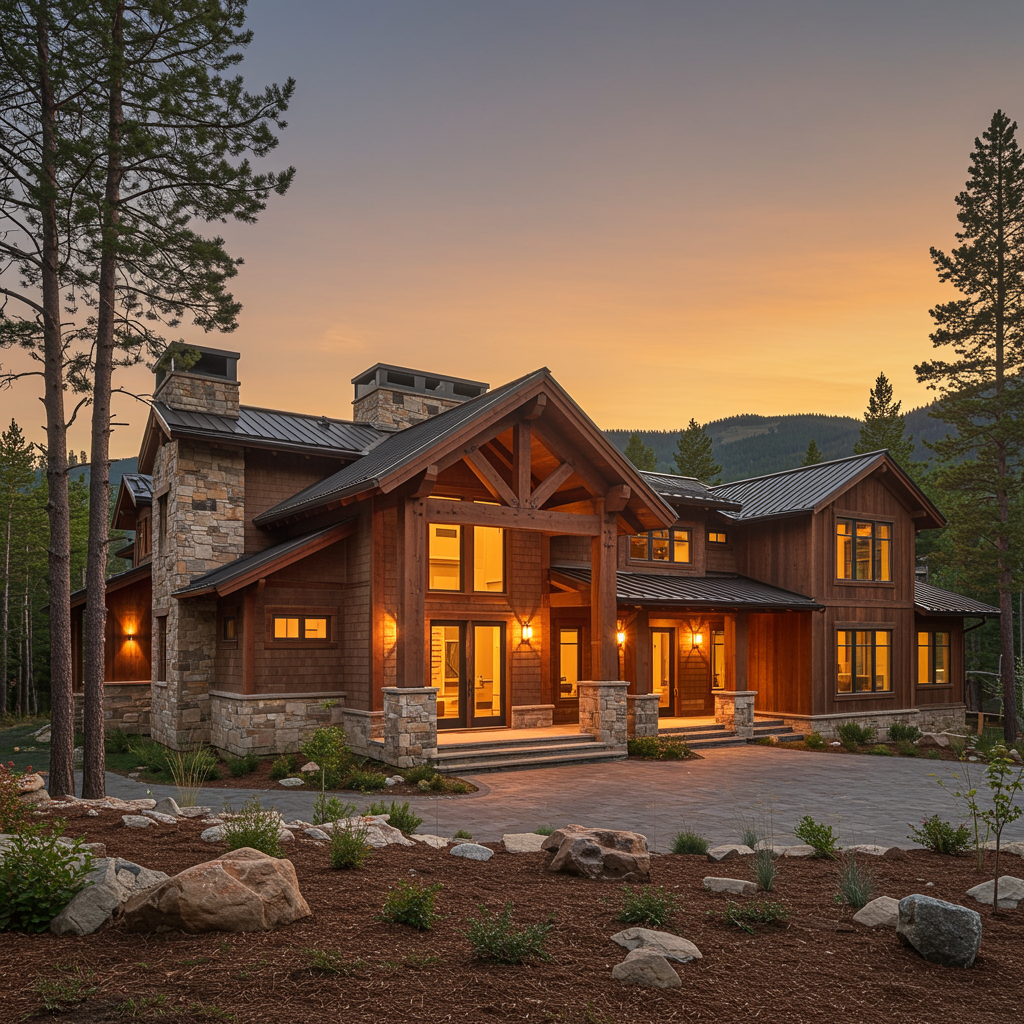
When you’re building a custom home in Asheville, you have a unique opportunity: design energy efficiency from the ground up.
You’re not retrofitting an older home. You’re starting fresh with the mountain climate, your lifestyle, and your long-term goals informing every decision.
In 2026, energy-efficient custom home building isn’t just about environmental responsibility. It’s about creating a home that performs beautifully, costs less to operate, and holds its value better than standard construction.
Why Energy Efficiency Matters More in Mountain Climates
Asheville and Western North Carolina present unique building challenges:
- Elevation variations mean colder winters and different solar angles
- Seasonal humidity swings require careful moisture management
- Unpredictable weather patterns stress building systems
- Terrain complexity requires strategic design for water management
These factors mean your HVAC system works harder, your foundation faces more stress, and your building envelope needs exceptional design. Energy efficiency isn’t optional in mountain homes—it’s essential.
Passive Solar Design: Working With the Mountain Sun
Passive solar design is the foundation of energy-efficient custom homes. It means positioning your home and designing windows to capture winter heat and reject summer heat without mechanical systems doing the work.
Key strategies for Asheville custom homes:
- South-facing windows capture low winter sun for free heating
- Strategic overhangs block high summer sun while allowing winter sun penetration
- Thermal mass in concrete floors or stone walls absorbs and releases heat slowly
- Proper orientation takes advantage of prevailing breezes and mountain views
- Shading design through trees and architectural elements reduces cooling loads
When passive solar design is done right, you’re working with your environment, not fighting it.
High-Performance Building Envelope
Your building envelope—walls, roof, foundation, and windows—is where energy efficiency begins.
Insulation Strategy
Standard insulation isn’t enough for mountain climates:
- Continuous exterior insulation eliminates thermal bridging
- High R-values: walls R-25 to R-30, attics R-50+
- Spray foam in critical areas like crawlspaces and rim joists
- Proper vapor barriers prevent condensation in mountain humidity
Air Sealing
A well-insulated home that leaks air is like a thermos with holes. Energy-efficient custom homes require:
- Sealed electrical outlets and penetrations
- Continuous air barriers throughout the envelope
- Blower door testing to verify performance
- Strategic caulking and weatherstripping
High-Performance Windows
Windows are critical in mountain homes—your connection to views and natural light, but also a major source of heat loss.
Specifications for Asheville custom homes:
- Triple-pane glass provides superior insulation
- Low-E coatings reflect heat in summer, retain it in winter
- Insulated frames in fiberglass or composite outperform aluminum
- Strategic placement: more glass on south-facing walls, less on north
Smart HVAC Systems: Efficiency Meets Comfort
Your heating and cooling system is the largest energy consumer. In custom builds, you can design the perfect system for your specific needs.
Heat Pump Technology
Modern heat pumps are revolutionizing home heating:
- Ductless mini-splits provide zone control and high efficiency
- Ground-source heat pumps tap into stable ground temperatures
- Air-source heat pumps now have improved cold-weather performance
System Design
Proper HVAC design includes:
- Manual J load calculations for right-sized systems
- Optimized ductwork that’s properly sized and sealed
- Smart thermostats that learn your patterns
- Ventilation strategy that provides fresh air without energy waste
Renewable Energy Integration
In 2026, many custom homes are designed to be solar-ready or solar-equipped from day one.
Renewable energy options for Asheville custom homes:
- Rooftop solar: Asheville gets adequate sun for meaningful production
- Solar thermal systems heat water directly from the sun
- Geothermal systems use stable ground temperatures
- Battery storage saves excess solar energy for night use
The goal isn’t necessarily to be completely off-grid. It’s to produce as much of your own energy as practical, reducing utility costs and grid dependence.
Water Efficiency
Energy efficiency extends beyond heating and cooling.
Water efficiency strategies:
- High-efficiency fixtures: low-flow toilets, showerheads, faucets
- Hot water system design: tankless or heat pump water heaters
- Rainwater harvesting captures roof runoff for irrigation
- Greywater systems reuse water from sinks and showers
Smart Home Technology
Modern custom homes include technology that helps you understand and optimize energy use:
- Energy monitoring systems provide real-time visibility
- Smart thermostats learn your patterns and adjust automatically
- Automated lighting uses occupancy sensors and daylight harvesting
- Appliance integration runs high-energy tasks during off-peak hours
The Financial Case for Energy Efficiency
Energy-efficient custom homes cost more upfront, but the long-term economics are compelling:
Typical payback scenarios:
- High-performance envelope: 5-10 year payback through lower utility bills
- Solar system: 7-12 year payback, plus 25-30 year lifespan
- Heat pump system: 8-15 year payback, plus superior comfort
Beyond financial returns, energy-efficient homes:
- Sell faster and for higher prices
- Provide superior comfort and indoor air quality
- Require less maintenance
- Perform better during power outages
Building Code and Incentives in North Carolina
Western North Carolina offers several advantages for energy-efficient custom builds:
- Energy Saver NC program provides rebates for efficient appliances and systems
- Federal tax credits offer up to $3,200 for energy-efficient improvements
- Local incentives: some municipalities offer additional rebates
Working with a builder who understands these programs can significantly reduce your net cost.
The Custom Home Advantage
Building custom in Asheville gives you advantages that existing home buyers never have:
- Design from scratch: every system optimized for efficiency
- Quality control: specify materials and construction methods
- Future-proofing: build for tomorrow’s technology and climate
- Long-term value: energy efficiency compounds over decades
Working With Your Builder
Choosing the right builder is critical for energy-efficient custom homes. Look for:
- Experience with high-performance homes
- Understanding of WNC climate and building requirements
- Commitment to energy modeling and performance verification
- Knowledge of available incentives and rebates
- References from previous energy-efficient builds
Your Energy-Efficient Mountain Home Awaits
Building a custom home in Asheville or Western North Carolina is an opportunity to create something truly special—a home that’s not just beautiful and functional, but also efficient, resilient, and aligned with your values.
Energy efficiency isn’t a luxury add-on. It’s the foundation of smart custom home building in mountain climates.
At WNC Built, we specialize in energy-efficient custom home design and construction throughout Asheville and Western North Carolina. We understand mountain terrain, local building requirements, and what it takes to create homes that perform beautifully while minimizing environmental impact.
If you’re ready to explore building your energy-efficient custom mountain home, we’d love to help. Contact us to discuss your vision and start the journey toward building smart.