
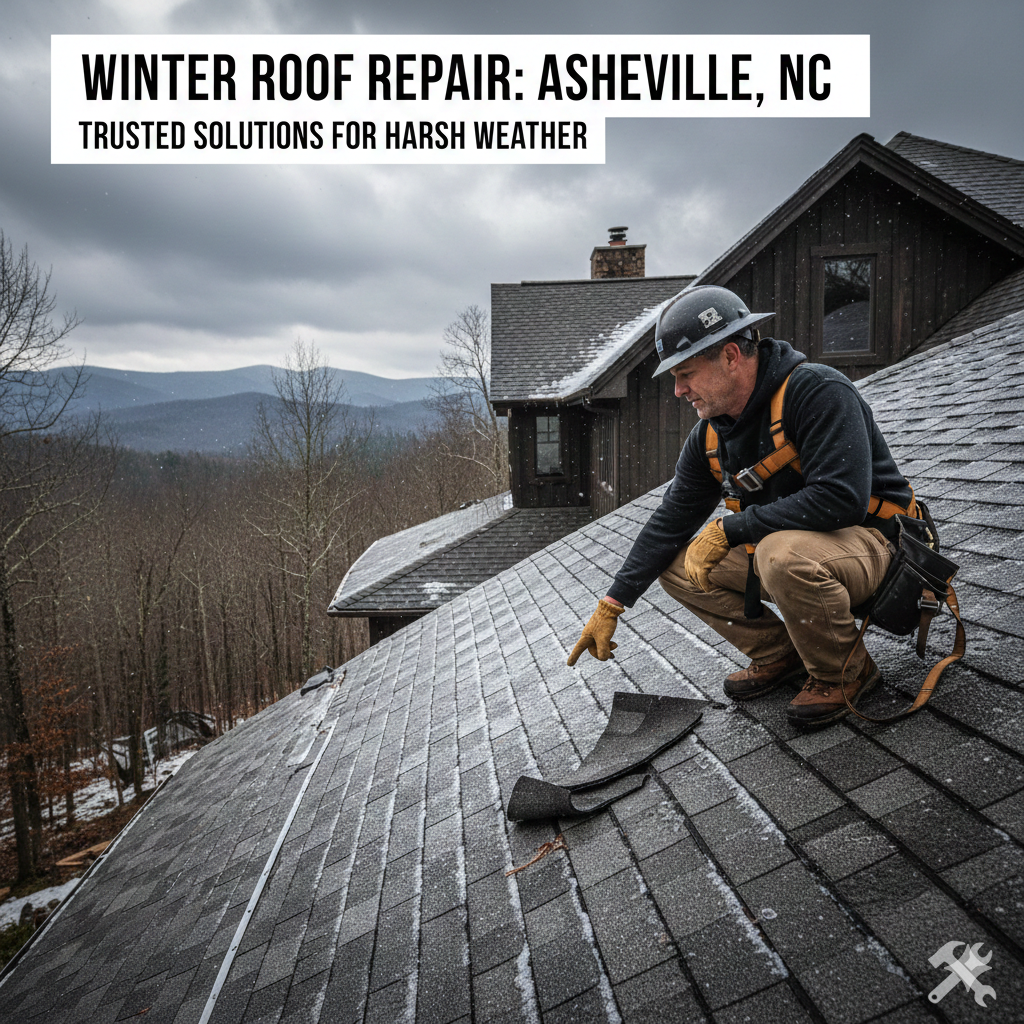
Winter in Asheville has a way of exposing roofing problems fast. Between fluctuating temperatures, freeze-thaw cycles, wind, and occasional snow or ice, small roofing issues can turn into expensive damage if ignored. If you’re a homeowner in Asheville or surrounding mountain areas, this is the time to pay close attention to your roof—even if you’re planning a larger renovation later in the year.
Here’s what to look for right now, what repairs are most urgent, and how to protect your home until spring.
Why Winter Roofing Issues Escalate Quickly in Asheville
Asheville’s climate is unique. Unlike consistently cold regions, we experience:
- Rapid temperature swings (freezing nights, warmer days)
- Heavy moisture from rain, fog, and melting snow
- Wind exposure, especially on ridgelines and elevated neighborhoods
These conditions stress roofing materials more than steady cold does. Water gets into tiny openings, freezes, expands, and widens gaps—often without obvious signs inside the house until damage is well underway.
Immediate Roofing Repairs That Shouldn’t Wait
1. Active Leaks or Water Stains
If you notice:
- Ceiling stains
- Dripping during rain
- Damp attic insulation
This is an urgent repair, not a “monitor it” situation. Even a slow leak can lead to mold, rotted framing, and insulation failure—especially in cold weather when moisture doesn’t dry out easily.
Temporary fixes now can prevent major repairs later.
2. Loose or Missing Shingles
Winter winds commonly lift or remove shingles. Exposed underlayment is vulnerable to moisture intrusion, and once water gets underneath, it can travel far before showing up inside.
Look for:
- Shingles lifted at the edges
- Bald or cracked shingles
- Shingles found in the yard after storms
Replacing a few shingles now is far less costly than repairing decking and interior damage later.
3. Flashing Failures (Chimneys, Vents, Valleys)
Flashing is one of the most common failure points in Asheville homes, especially older ones.
Pay attention to:
- Rusted or separating metal around chimneys
- Gaps around plumbing vents
- Valleys where debris traps moisture
Flashing issues often cause slow, hidden leaks—these are prime candidates for winter escalation.
4. Ice-Related Damage & Poor Drainage
Even light snow or ice can expose problems when:
- Gutters are clogged
- Downspouts are blocked
- Roof slopes drain improperly
When melting ice refreezes, it can force water under shingles and into fascia boards. Clearing gutters and correcting drainage paths is a preventive repair that pays off immediately.
5. Sagging or Soft Roof Areas
If you notice:
- Uneven rooflines
- Soft spots during attic inspection
- Excessive moisture smell in the attic
These may indicate structural or decking issues worsened by winter moisture. These should be evaluated promptly, even if the repair itself is staged.
What Can Be Safely Done During Winter?
Many homeowners worry that roofing work has to wait until spring. In reality, most repairs can still be done in winter, including:
- Shingle replacement (weather permitting)
- Flashing repairs
- Leak sealing
- Gutter and drainage corrections
- Temporary weatherproofing
Full roof replacements may be scheduled later, but repairs and stabilization should not wait if there’s active risk.
Budgeting for Immediate Repairs vs. Spring Projects
A smart approach is to split work into two phases:
Phase 1: Immediate Protection (Now)
- Stop leaks
- Replace compromised shingles
- Secure flashing
- Improve drainage
Phase 2: Planned Improvements (Spring–Summer)
- Full roof replacement
- Upgrades or material changes
- Energy efficiency improvements
This protects your home now without forcing rushed long-term decisions.
Final Thoughts for Asheville Homeowners
Winter is not the season to ignore roofing issues—it’s often when they become visible for the first time. Addressing small problems now:
- Prevents structural damage
- Reduces mold risk
- Protects insulation and energy efficiency
- Saves money in the long run
If you’re unsure whether an issue is minor or urgent, a professional inspection can help you prioritize without pressure. The goal right now isn’t perfection—it’s protection.