
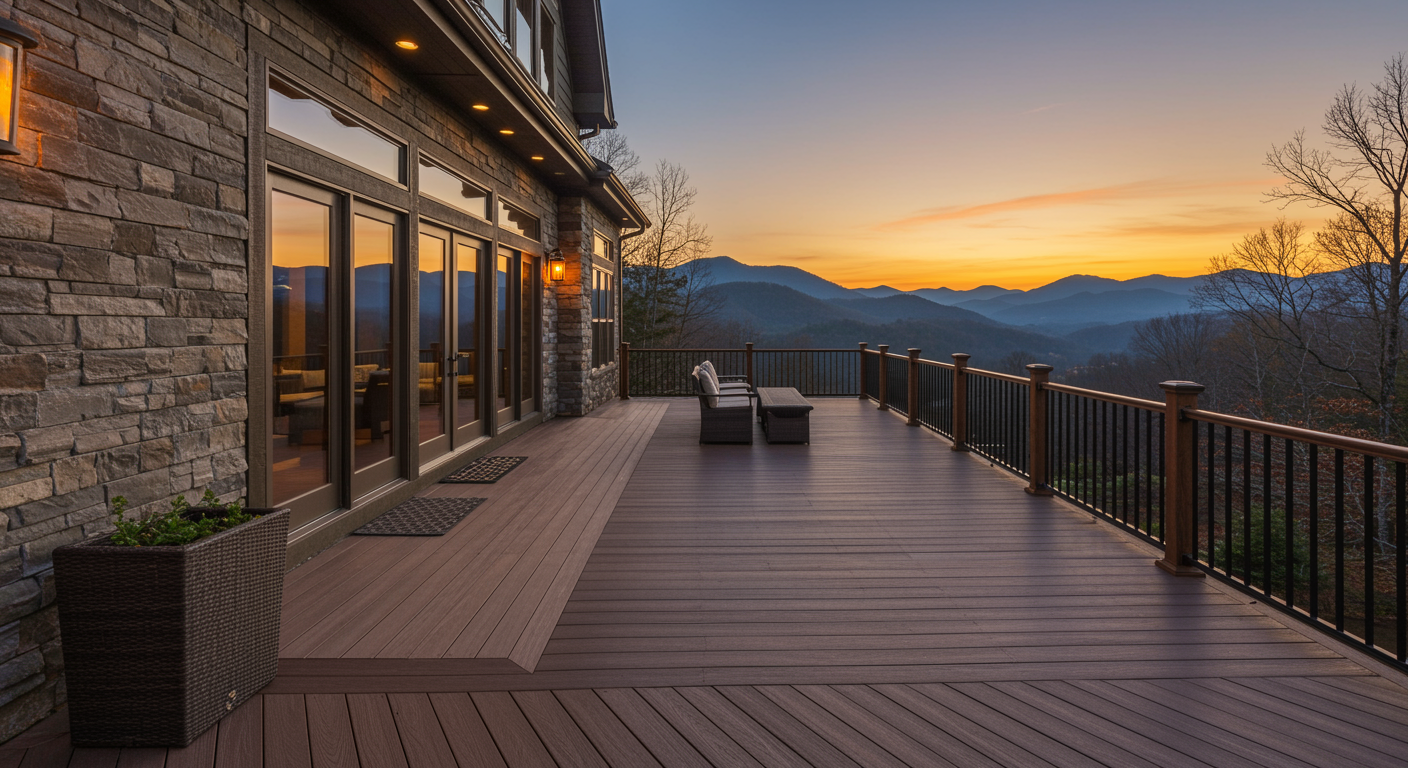
In mountain towns like Asheville and throughout Western North Carolina, outdoor living spaces are a big part of the lifestyle. Decks are where homeowners enjoy cool summer evenings, fall foliage, and mountain views. But building or remodeling a deck in the mountains comes with unique environmental challenges: moisture, temperature swings, UV exposure, and heavy seasonal rain.
Because of these conditions, one of the most common questions homeowners ask is: Should I build my deck with wood or composite?
Below is a practical breakdown of how each option performs in mountain environments.
The Reality of Mountain Climate on Decks
Unlike flatter regions, mountain homes experience more extreme environmental conditions. Deck materials here must withstand:
- High moisture levels from fog, rain, and humidity
- Frequent freeze–thaw cycles in winter
- Strong UV exposure at higher elevations
- Organic debris like leaves and pollen that retain moisture
These conditions can accelerate wear on outdoor structures if materials aren’t chosen carefully.
Wood Decking: Natural Beauty with Ongoing Maintenance
Traditional wood decking remains popular for many homes in the region.
Advantages of Wood Decks
1. Lower upfront cost
Pressure-treated lumber is typically the most affordable option for building or replacing a deck.
2. Natural aesthetic
Wood provides a classic look that blends well with cabins and mountain homes.
3. Easier to repair
Individual boards can usually be replaced without affecting the entire structure.
Challenges in Mountain Environments
Wood decking requires consistent maintenance to withstand mountain weather.
Common issues include:
- Rot and moisture damage
- Warping from temperature swings
- Splintering and cracking
- Frequent staining or sealing
In climates like Western North Carolina, wood decks typically need cleaning and resealing every 1–2 years to maintain longevity.
Composite Decking: Built for Durability
Composite decking—commonly manufactured by companies like Trex and TimberTech—is made from a blend of recycled wood fibers and plastics. It has become increasingly popular for homeowners who want a low-maintenance solution.
Advantages of Composite Decking
1. Moisture resistance
Composite boards are far less susceptible to rot and mold.
2. Minimal maintenance
No staining or sealing required—just periodic cleaning.
3. Long lifespan
Composite decks often last 25–30 years or more.
4. Consistent appearance
They resist fading, splintering, and cracking better than natural wood.
Considerations Before Choosing Composite
Composite decking does have a few tradeoffs:
- Higher upfront cost compared to pressure-treated lumber
- More structural planning required because boards expand and contract
- Heat retention in direct sunlight
However, many homeowners find that lower maintenance costs over time offset the initial investment.
Which Option Is Better for Mountain Homes?
The best choice often depends on the homeowner’s priorities.
Wood may be best if:
- Budget is a primary concern
- You prefer a traditional natural appearance
- You’re comfortable with routine maintenance
Composite may be best if:
- You want a low-maintenance deck
- The home is a vacation property or Airbnb
- Long-term durability is more important than initial cost
In regions like Asheville, where outdoor spaces are heavily used for relaxation and entertaining, many homeowners are now choosing composite decking for longevity and convenience.
Planning a Deck Remodel
Regardless of material, a successful deck project depends on proper structural design, drainage planning, and code compliance. Important factors include:
- Joist spacing and load requirements
- Ledger board installation
- Railing safety standards
- Permit requirements
A professional inspection can determine whether a deck needs repairs, reinforcement, or full replacement.
Final Thoughts
Mountain living offers some of the most beautiful outdoor environments in the country—but it also demands durable building materials. Whether you choose wood for its classic character or composite for its low maintenance, investing in the right decking material ensures your outdoor space remains safe, comfortable, and enjoyable for years to come.