
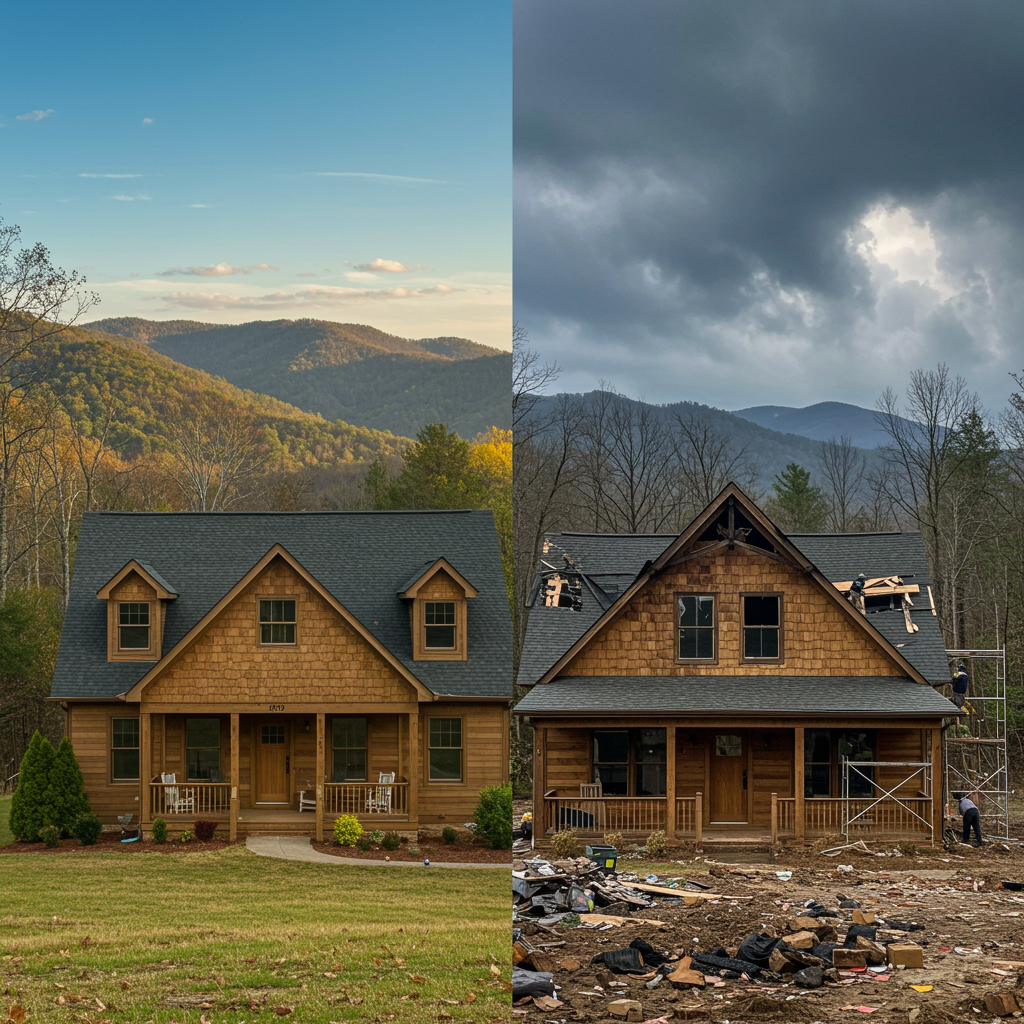
When disaster strikes—whether it’s flooding from heavy rain, wind damage from a storm, or other natural events—the immediate aftermath can feel overwhelming. For homeowners in Western North Carolina, the recovery process requires both quick action and careful planning. Understanding what to do in the first hours and days after a disaster can mean the difference between a manageable restoration and a prolonged, costly recovery.
At WNC Built, we’ve worked with many Asheville and mountain community homeowners navigating disaster recovery. Here’s what you need to know about restoring your home after a disaster.
Immediate Actions: The First 24-48 Hours
The moments immediately following a disaster are critical. Your first priority is safety—for you and your family.
1. Ensure Safety First
- Evacuate if instructed by authorities
- Turn off utilities if there’s flooding or gas smell
- Avoid standing water (electrical hazards, contamination)
- Watch for structural damage—unstable walls, sagging ceilings, or compromised support beams
- Document everything with photos and video for insurance claims
2. Contact Your Insurance Company
Don’t wait. Call your homeowner’s insurance immediately, even if you’re not sure about the extent of damage. Insurance companies often have specific timelines for filing claims, and early documentation is crucial.
3. Begin Water Removal (If Safe)
If water intrusion is the issue, time is critical. Standing water can cause structural damage to framing and foundations, mold growth (which can begin within 24-48 hours), electrical hazards, and contamination from sewage or chemicals. If water levels are manageable and it’s safe to do so, begin removing water. However, for significant flooding, professional water extraction is essential.
The Assessment Phase: Understanding the Damage
Once immediate safety concerns are addressed, a thorough assessment is necessary.
Structural Inspection
Before any restoration work begins, have a professional inspect your home’s structural integrity. In mountain communities like Asheville, terrain and foundation types vary widely. Look for foundation cracks or settling, compromised support beams or framing, roof damage or missing shingles, and damaged exterior walls or siding. Structural damage must be addressed before interior restoration can proceed safely.
Water Damage Assessment
Professional water damage assessors use moisture detection equipment to identify all affected areas—including hidden moisture in walls, crawlspaces, and attics. This is critical because moisture trapped in walls leads to mold, wet insulation loses its effectiveness, and drywall and wood framing can rot if not properly dried.
Mold Risk Evaluation
Mold can begin growing within 24-48 hours of water exposure. A professional assessment identifies current mold presence, areas at high risk for mold growth, and proper remediation protocols.
The Restoration Process: Step by Step
Phase 1: Water Removal & Drying
Professional water extraction removes standing water, followed by strategic drying using dehumidifiers and air movers. The goal is to dry affected materials completely—typically within 3-7 days, depending on humidity and damage extent.
Phase 2: Mold Remediation (If Needed)
If mold is present or at high risk, professional remediation involves containment of affected areas, HEPA filtration to prevent spore spread, removal of contaminated materials, treatment of remaining surfaces, and verification testing to confirm remediation success.
Phase 3: Material Removal & Replacement
Damaged materials must be removed and replaced, including drywall (if saturated or moldy), insulation (if wet or contaminated), cabinetry and trim (if structurally compromised), appliances (if water-damaged), and fixtures and hardware.
Phase 4: Reconstruction & Restoration
Once the space is dry and safe, reconstruction begins with new drywall installation, insulation replacement, electrical system inspection and repair, plumbing assessment and repair, HVAC system cleaning and restoration, and interior finishes (paint, trim, fixtures).
Special Considerations for WNC Homes
Mountain Terrain & Drainage
Western North Carolina’s steep terrain means water moves quickly and forcefully. After disaster recovery, consider improved grading around your home, enhanced drainage systems, sump pump installation or upgrade, and foundation waterproofing.
Older Home Considerations
Many Asheville homes are older, with unique construction methods. Restoration must account for original materials and construction techniques, historic preservation requirements (if applicable), and compatibility of new materials with existing structure.
Humidity & Mold Risk
Mountain humidity can complicate drying and increase mold risk. Proper ventilation and dehumidification are essential during and after restoration.
Timeline & Budget Expectations
Disaster restoration timelines vary dramatically based on damage extent. Minor water damage typically takes 2-4 weeks, moderate damage takes 4-12 weeks, and severe damage can take 3-6+ months. Costs depend on damage severity, materials, and whether structural work is needed. Insurance coverage varies—review your policy and work with your adjuster to understand what’s covered.
Working with Contractors During Recovery
Choosing the right contractor is critical during disaster recovery. Look for licensed, insured professionals with disaster restoration experience, local knowledge of WNC building requirements and climate, clear communication and transparent pricing, references from previous disaster recovery projects, and ability to work with insurance companies.
Prevention: Reducing Future Risk
While you can’t prevent all disasters, strategic improvements can reduce vulnerability. Improve drainage with proper grading and gutters to direct water away from your home. Seal entry points with caulk and weatherstrip to prevent water intrusion. Upgrade systems with modern HVAC and electrical systems that are more resilient. Reinforce structure with roof reinforcement and foundation improvements. Install protective systems like sump pumps, backwater valves, and moisture barriers.
Moving Forward
Disaster recovery is a marathon, not a sprint. The process requires patience, clear communication with contractors and insurance companies, and realistic expectations about timelines and costs. The good news? With proper restoration, your home can be restored to—or even improved beyond—its pre-disaster condition. Many homeowners use disaster recovery as an opportunity to upgrade systems, improve efficiency, and build greater resilience into their homes.
If your WNC home has experienced disaster damage, don’t navigate the recovery process alone. Professional guidance from experienced contractors who understand mountain homes and local building requirements can make the difference between a smooth recovery and a prolonged, stressful process. At WNC Built, we’ve helped many Asheville and Western North Carolina homeowners restore their homes after disaster. If you need guidance on disaster recovery, structural assessment, or restoration planning, we’re here to help. Contact us to discuss your situation and explore your options.