
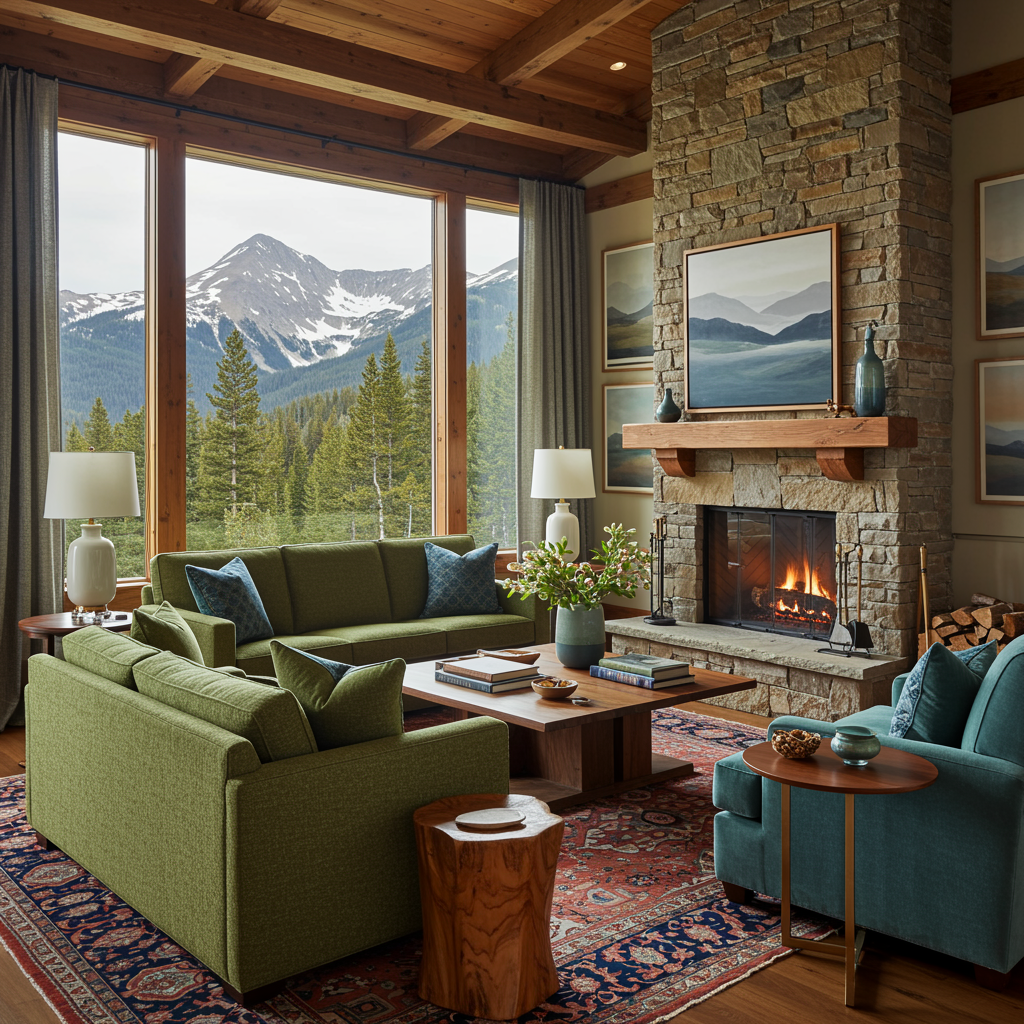
If you’ve been scrolling through design inspiration lately, you’ve probably noticed something shifting. The stark, minimalist interiors that dominated the last decade are giving way to something warmer, more personal, and deeply intentional. And for homeowners in Asheville and Western North Carolina, this shift toward character-driven design is exactly what our mountain communities have been craving.
The design trends emerging in 2026 aren’t about chasing what’s trendy. They’re about creating homes that feel authentic, comfortable, and true to who you are. Whether you’re planning a kitchen renovation, updating your living spaces, or reimagining your entire home, understanding these trends can help you make decisions that will feel timeless—not dated—five years from now.
The Return to Warmth: Color That Surrounds You
For years, white walls and cool gray palettes dominated modern design. But in 2026, color is making a powerful comeback—and it’s not subtle.
We’re seeing rich, saturated tones showing up on walls, ceilings, cabinetry, and trim. Deep navy, sage green, warm olive, terracotta, and muted peacock blue are creating immersive spaces that feel intentional and emotionally grounded. In mountain homes, these colors work beautifully because they complement the natural landscape outside your windows while creating cozy, intimate interiors.
The psychology behind this shift is simple: these deeper tones absorb light and soften edges, making larger rooms feel warmer and more inviting. In smaller spaces, they create a sense of comfort and enclosure. And in a home that opens to dramatic mountain views, color helps create moments of calm and retreat.
For your renovation: If you’re hesitant about committing to a bold wall color, start with one accent wall or a feature room. A sage green dining room or deep blue primary bedroom can completely transform how a space feels without overwhelming your entire home.
Traditional Details Are Back (But Different)
Remember when traditional design felt stuffy and overly formal? That’s changing. In 2026, traditional details are being reinterpreted with a fresh, relaxed approach.
We’re seeing the return of:
- Arched doorways and curved architectural elements
- Paneling and millwork that adds character without formality
- Layered textiles with pattern and texture
- Warm wood tones and natural finishes
- Detailed hardware and fixtures that feel intentional
The key difference? These details aren’t coordinated or matchy-matchy. Instead, they’re mixed and layered to create a collected, lived-in feel. A patterned sofa paired with a solid chair. Drapery with weight and movement. A vintage lighting fixture mixed with contemporary pieces.
For mountain homes in Asheville, this trend aligns perfectly with our architectural heritage. Many homes in our area have original details—wood trim, built-ins, arched doorways—that are being rediscovered and celebrated rather than covered up.
For your renovation: If your home has original architectural details, consider restoring or highlighting them rather than removing them. These elements add character and authenticity that can’t be replicated with new construction.
Natural Materials and Honest Finishes
The shift toward sustainability and longevity is influencing material choices across the board. Homeowners are moving away from highly polished, synthetic finishes and toward materials that age gracefully and tell a story.
This means:
- Raw and reclaimed wood with visible grain
- Natural stone with variation and character
- Unlacquered brass and bronze that patina over time
- Linen, wool, and natural textiles
- Leather that wears and develops character
These materials aren’t just beautiful—they’re durable and sustainable. A leather chair that wears well, a wood table marked by years of use, a stone countertop with natural variation—these pieces ground a space and give it authenticity.
In Western North Carolina, where we’re surrounded by natural beauty, this trend feels especially relevant. Using materials that honor and complement our environment creates homes that feel connected to place.
For your renovation: Invest in quality materials that will last. A solid wood cabinet will outlast and outperform a particle board alternative, and it will look better as it ages. Consider how materials will patina and change over time—that’s part of their beauty.
Curves and Soft Geometry
The hard lines and sharp angles that defined minimalist design are softening. Curves are appearing everywhere—in furniture, cabinetry, mirrors, and architectural details.
Rounded sofas, arched cabinet fronts, scalloped edges, and sculptural forms create spaces that feel more organic and approachable. Even in clean, contemporary spaces, there’s a desire for warmth and movement.
This trend is particularly relevant for kitchen and bathroom renovations. Curved kitchen islands, rounded cabinet edges, and arched niches add visual interest and make spaces feel less institutional and more like home.
For your renovation: Consider incorporating curves in key focal points—a curved kitchen island, an arched doorway, or rounded cabinet edges. These details add personality without overwhelming the space.
Layered Textures and Tactile Spaces
In 2026, design is becoming more tactile. Textured plaster, handmade tiles, grasscloth, boucle fabrics, and natural stone are introducing subtle drama and an organic vibe to interiors.
The goal isn’t bold pattern or color—it’s creating spaces that invite touch and feel rich and layered. A textured wall paired with smooth stone. Rough wood beams with soft linen. Sculptural lighting with natural materials.
This approach works beautifully in mountain homes, where we can layer indoor textures with the natural textures visible through windows—rough bark, layered stone, organic landscaping.
For your renovation: Mix smooth and textured finishes throughout your space. A textured accent wall paired with smooth cabinetry. Rough stone paired with polished metal. This layering creates visual and tactile interest.
Individualism Over Perfection
Perhaps the biggest shift in 2026 design is the move away from perfection and toward authenticity. Clients are no longer asking for spaces that feel staged or polished. They want rooms that feel alive, with personality and imperfections that tell a story.
This means:
- Fewer mass-produced pieces, more vintage and one-of-a-kind finds
- Patinated finishes and pieces that show their age
- Rooms that reflect the people who live there
- Design that prioritizes comfort and function over Instagram-worthiness
For homeowners in Asheville, this is liberating. You don’t need to follow a design formula. Your home should reflect your lifestyle, your values, and your personality.
For your renovation: Start with what draws you in. A color you keep coming back to. A style that makes you feel at home. Let those instincts guide your decisions. The most memorable homes are the ones that feel unmistakably personal.
How These Trends Apply to Your Asheville Home
Mountain homes have unique advantages when it comes to implementing these trends. Our natural landscape, architectural heritage, and community values align beautifully with 2026 design direction.
Whether you’re renovating a kitchen, updating a bathroom, or reimagining your entire home, these trends offer a framework for creating spaces that feel timeless, authentic, and true to who you are.
The key is approaching design with intention. Choose colors and materials that resonate with you. Invest in quality pieces that will last. Layer textures and details that add character. And most importantly, create spaces that feel like home—not like a showroom.
Ready to Bring These Trends Into Your Home?
At WNC Built, we specialize in helping Asheville homeowners translate design inspiration into beautiful, functional spaces. Whether you’re drawn to warm color palettes, traditional details, or natural materials, we can help you create a renovation that feels authentically yours.
If you’re considering a renovation and want to explore how 2026 design trends might work in your home, we’d love to help. Schedule a free consultation with our team to discuss your vision and how we can bring it to life.